So yesterday I made a post where I suggested to Mr Henderson, CEO of Home Group that he should consider apologising to me.
I was brought up a Catholic and heard a lot about the need to forgive. For our priests everything can and should be forgiven and, in theory it actually makes sense as it prevents us from being stuck in the past. I made a lot of effort to forgive my dad for the fact that he wasn’t the dad I wanted to have, although, ultimately it only happened after I realised he was undiagnosed autistic and never got the support he needed for his mental health problems. Forgiving him definitely helped me to release a lot of tension, although it brought new problems with it: since I forgave him he started following me every time I was back at home. He would start with being nice but then quickly moved on to expressing his frustration with my mum and words he was using are not what I’d like to put on this blog.
For clarification, I never told my dad that I forgave him. I didn’t have any deep, or even shallow conversation with him about that, it would simply be totally impossible. I just forgave him in my heart and I felt loads of compassion for him. He must have felt it and that’s why he started approaching me. It is said autistics can sense other people feelings through their six sense and I believe this to be true.
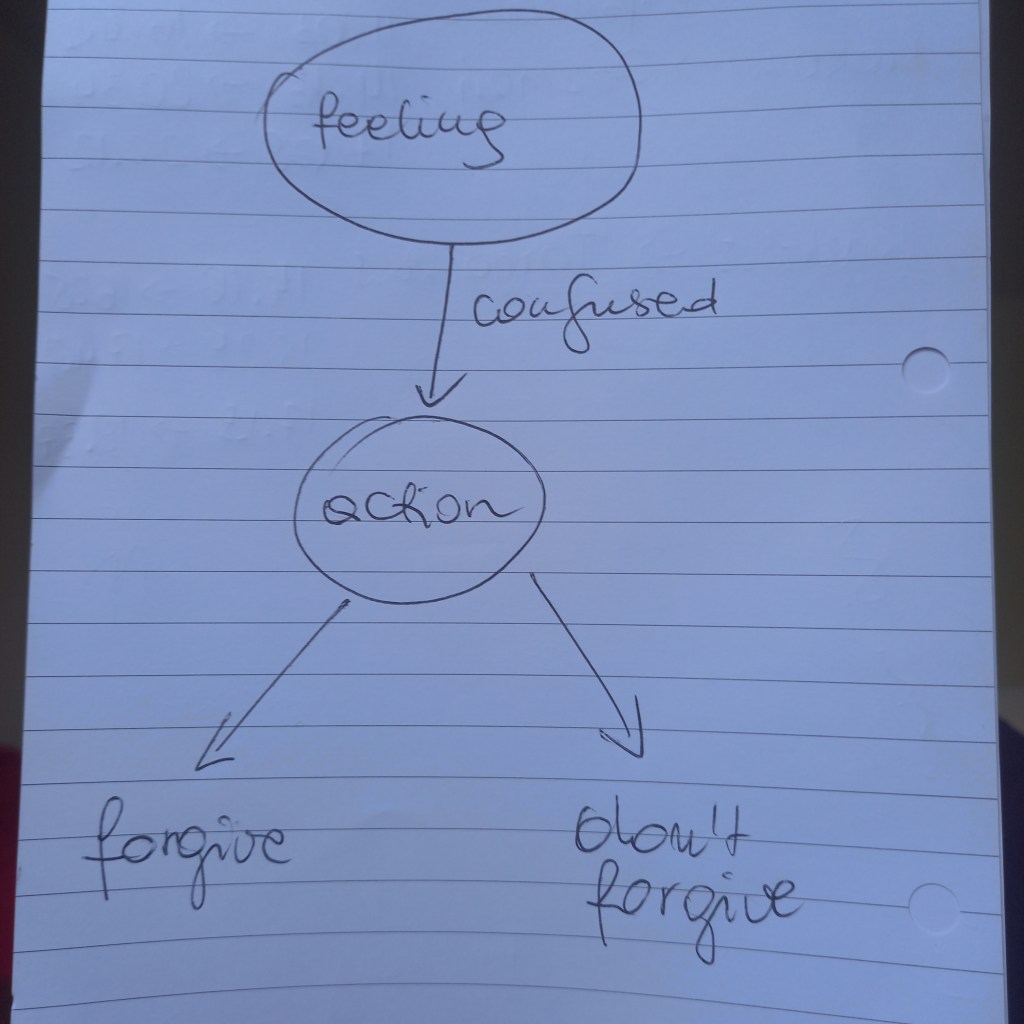
However, should I forgive Home Group? That’s a bit difficult one… as an autistic I’m confused about my own feelings and also about the consequences my actions will have. I believe my story can shed light on difficulties autistics people sometimes face in employment so I don’t want to stop speaking about it. However, the procedure I learned in childhood for being hurt is to forgive every time. So that was what I wanted to do. Mr Henderson would just need to apologise.
And then what happened was, Ashley Peterson, a fellow blogger from https://mentalhealthathome.org commented saying it’s good that I’m speaking up and that comment totally change the direction of my thoughts: I realised that if I forgive it will be like I should talk a bit less about it, maybe mentioning it once in a blue moon would be ok, but definitely not too often.
That also made me realise, once again (I doubt I mention that before) that my though pattern is basically following a diagram.
I’ll come back to Home Group and forgiveness later. Btw, even if I don’t want to forgive, Mr Henderson should still apologise, don’t you think? He should have done that quite a few years ago.


 Autistic and me
Leave a comment